
Buying a badminton racket shouldn't feel like guesswork. But walk into any shop (or scroll any store) and you're hit with numbers - 3U, 4U, head-heavy, extra stiff - with no explanation of what they mean for your game.
This guide breaks down the three specs that matter most, so you can pick a racket that fits how you actually play.
1. Weight: 3U vs 4U vs 5U
Racket weight is measured in "U" - the higher the number, the lighter the racket:
- 3U (85-89g): More power and stability, but demands more arm strength. Popular with advanced attacking players.
- 4U (80-84g): The sweet spot for most players. Fast enough for defense, solid enough for smashes.
- 5U (75-79g): Ultra-light and fast - great for juniors, doubles specialists, and players who value speed over raw power.
Rule of thumb: if you're not sure, start with 4U. It's the most forgiving weight class and suits the widest range of playing styles.
2. Balance: head-heavy, even, or head-light?
Balance point decides whether a racket feels powerful or speedy:
- Head-heavy (295mm+): Extra mass in the head generates more smash power. Best for aggressive baseline players.
- Even balance (~285-295mm): The all-rounder. Decent power, decent speed.
- Head-light (under 285mm): Quick handling for fast exchanges, drives, and net play. Doubles players love these.
Your playing style should drive this choice - not what the pros use. A head-heavy racket in the wrong hands just causes shoulder fatigue.
3. Shaft stiffness: stiff vs flexible
- Stiff / extra stiff: More accuracy and power if you have fast, compact swing technique. Punishes slow swings.
- Medium: Balanced feedback for intermediate players.
- Flexible: Easier power for beginners and players with shorter swings - the shaft does more of the work.
Beginners: flexible shaft. Intermediates: medium. Advanced with good technique: stiff.
Head shape: isometric vs oval
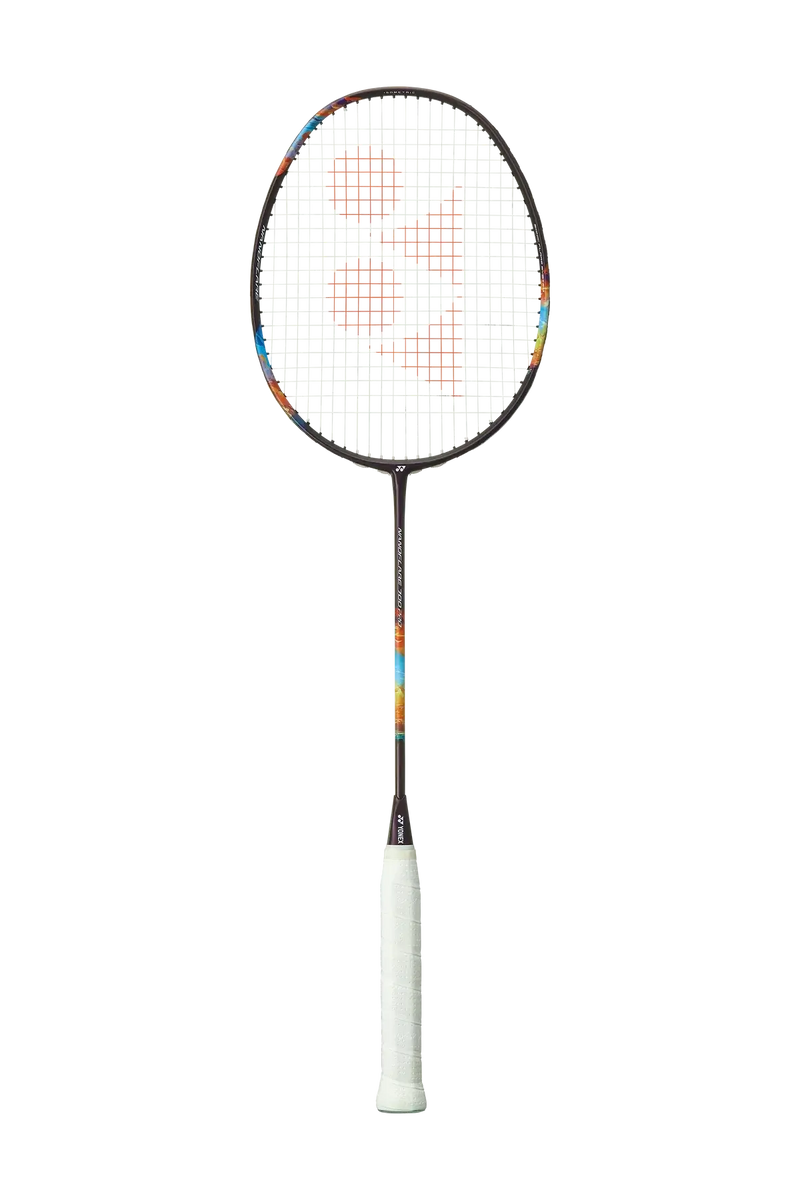
One more spec worth knowing. Racket heads come in a few shapes, and the shape changes how the racket feels. The isometric head (squarish top) has a larger sweet spot - this is what most modern rackets use. The traditional oval head has a smaller, more concentrated sweet spot but feels more solid on clean hits. You will also see teardrop shapes with longer main strings that feel bouncier off the string bed. For most players, isometric is the safe default.
Putting it together: what should YOU buy?
| Player type | Specs | Our picks |
|---|---|---|
| Beginner / casual | 4U-5U, even / head-light, flexible |
HUNDRED CULT 79 SUPERLITE - $59 Yonex B6500 - $28 |
| Intermediate all-rounder | 4U, even, medium |
HUNDRED Flareon Typhoon (4U) - $89 Yonex Nanoflare X5 - $55 |
| Attacking advanced | 3U-4U, head-heavy, stiff |
Victor Thruster F C Ultra X - $230 Yonex Astrox 10 - $55 |
| Fast doubles | 4U-5U, head-light, medium-stiff |
Yonex Nanoflare 700 Game - $150 Victor AuraSpeed HyperSonic Plus - $230 |
A note on price
You don't need a $230 flagship to play well. Rackets in the $59-$120 range from brands like HUNDRED and Protech offer excellent value - proper weight distribution and build quality without the premium markup. That's exactly why we stock them.
A note on warranty
One thing most buying guides won't tell you: warranty support varies a lot by brand. In our experience as a shop, Yonex warranty claims can be slow and difficult to get approved, while HUNDRED and Protech process claims quickly and with ease. When you're comparing rackets, factor in not just the price tag but how the brand treats you if something goes wrong.
Still not sure?
Come by the shop or reach out - we'll match a racket to your game, not just your budget.
Related reading
- Best badminton rackets for beginners 2026 (coming soon)
- Yonex Mavis 350 vs 300: which shuttle should you buy? (coming soon)
- How to choose badminton shoes (coming soon)
Badminton Avenue is the official pro shop of Bay Badminton Center in the San Francisco Bay Area.